
As the woodlands slowly come to life and the weather begins to thaw, the floors of the forests become a sea of purple, carpeted in vast swathes of bluebells.
It’s an iconic sight of spring, but one I had never previously taken the time to seek out. I changed that in early May, heading to the Rownham Plantation at Ashton Court in Bristol, and ticking off one more thing from my 30 nature things to do before 30 list.
Working for a wildlife magazine, I’ve seen plenty of pictures of bluebell woods. I thought I knew what to expect, but the real thing was better than I could ever have imagined.
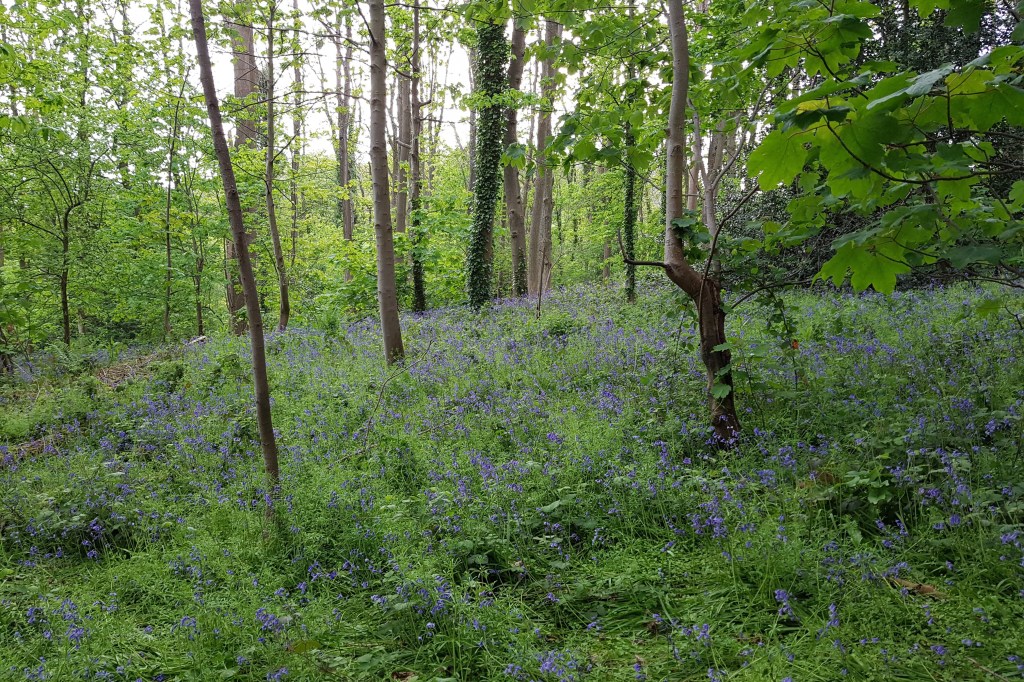
A hush hangs over the woodland. Here and there a blackbird sings, hopping from tree to tree but it was quiet. I was sheltered from the wind that had picked up over the deer park, and the trees were still.
Tiny delicate flowers coated the undergrowth as far as the eye could see. I walked further and further in, thinking to see the end of them around every corner, but they went on.
The overall spectacle is breathtaking, but the detail is even more so. Up to 20 sweetly-scented bell-shaped flowers hang from a single stalk, which droops to one side. They can be easily confused with non-native Spanish bluebells, an escaped garden species, particularly as the two species have cross bred to make a Spanish-British hybrid – diluting the gene pool of our native plants.
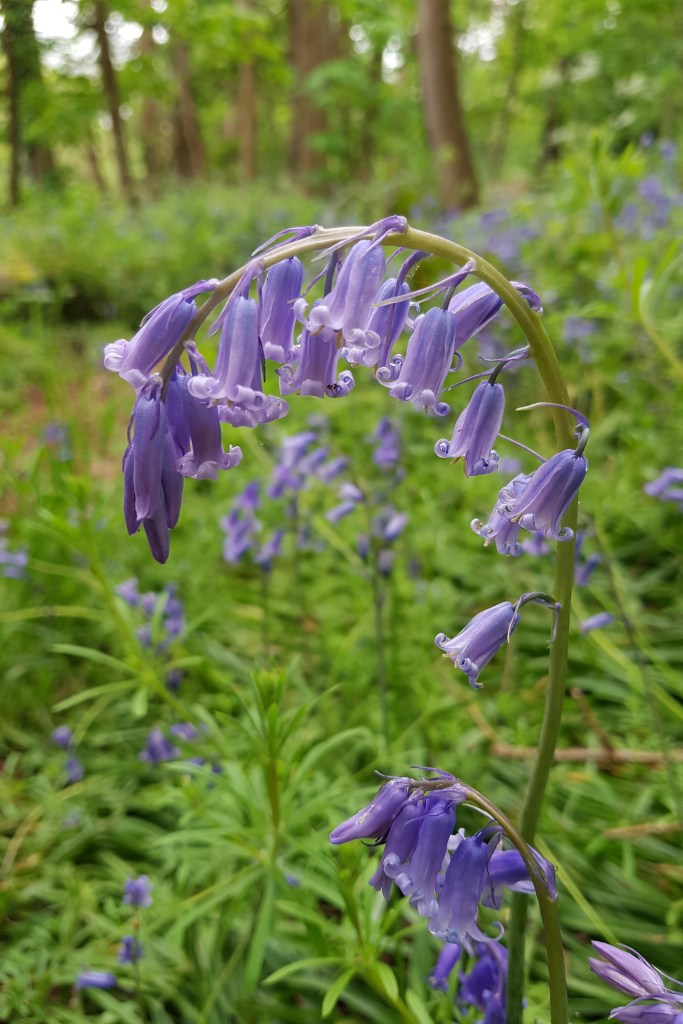
Our native bluebells have white or cream pollen and are deep violet blue. Look for the characteristic drooping stem and almost all flowers on one side of the stem. The petal tips are curved and the flowers have a strong, sweet scent.
There has been a lot of focus recently on nature helping your mental and physical wellbeing, with activities such as forest bathing increasing in popularity. The annual arrival of the bluebells is a great opportunity to practice mindfulness in nature. Head out, sit, breathe, use all of your senses, and experience this magnificent spring spectacle.
 Emma Pocklington