
I have seen a goldcrest. Hurrah!
Ever since I saw this tiny bird on last year’s Springwatch I have been determined to see one. The UK’s smallest bird (I previously, incorrectly, thought this was the wren) goldcrests are a delightful and tricky bird to see. One had turned up in my mum’s garden, obediently arriving for the RSPB’s Big Garden Birdwatch, but it hadn’t made an appearance while I was there.
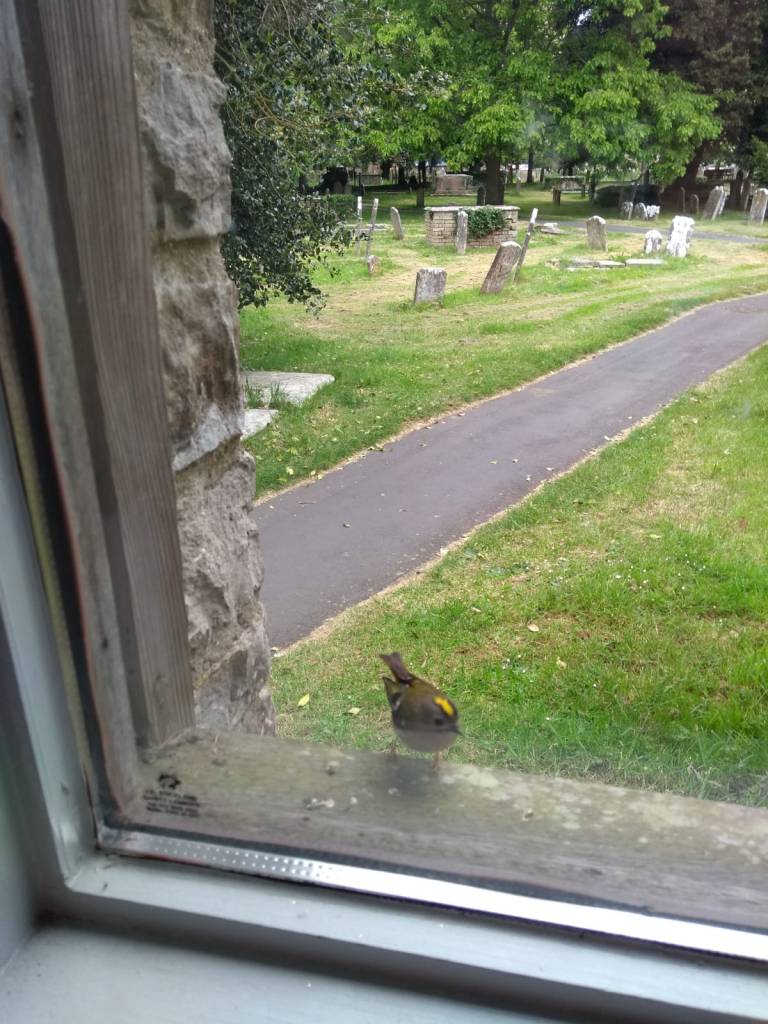
Then, to add insult to injury, a pair of goldcrests turned up outside my mum’s local church, tapping on the window while the church held its weekly Friday Fellowship. They were lured in, no doubt, by the typical churchyard yews.
I finally saw my first one on a walk around Rhinefield Ornamental Drive in the New Forest, a short distance outside Brockenhurst. With its giant sequoias, the Ornamental Drive is just the sort of coniferous woodland goldcrests favour for their nests – deep rounded cups made out of spiders’ webs that hang suspended from the ends of branches. It was just this fascinating nesting behaviour, the stretchy nest growing with the chicks, that drew my attention to them on Springwatch.
Goldcrests are thought to weigh on average around 5.5g, that’s just slightly more than a 20p piece. They are tiny, round and dull-coloured, except for the impressive flash of colour on their heads. The crown patch is more yellow on females, while on males it shows more deeply orange at the base, which can only be seen when it is raised in display. A hyperactive bird, it can be seen busy eating insects, spiders and seeds.
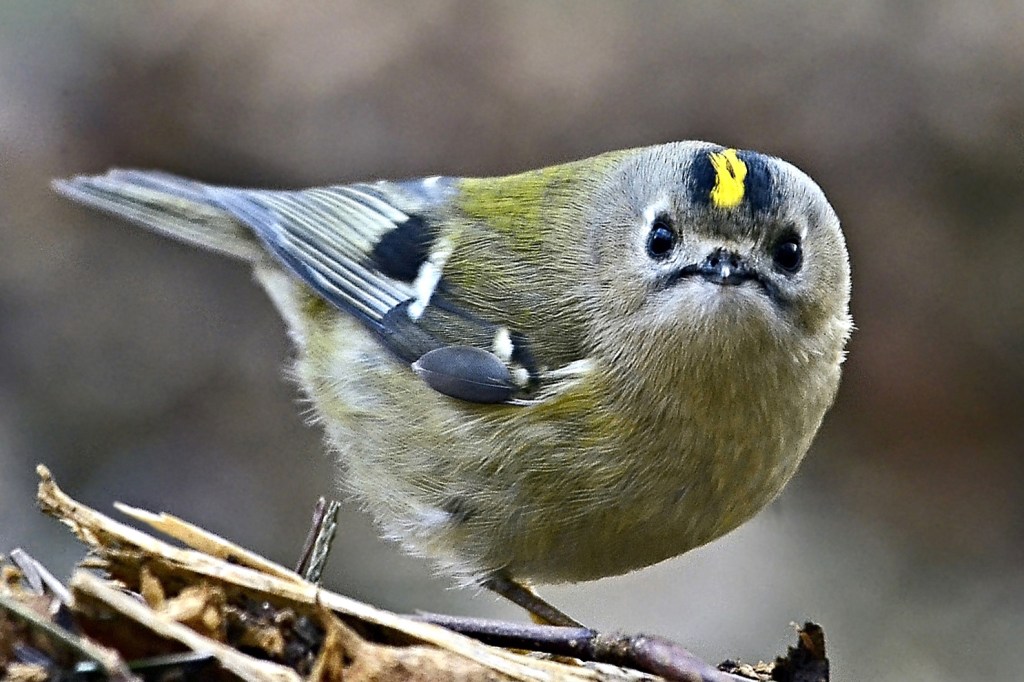
Goldcrests can be easily confused with firecrests, a marginally larger and more brightly coloured bird. Firecrests are much less common in the UK, but I think I would be hard pushed to tell them apart! (All ID tips welcome.)
I’d kept my eyes tree-wards all the way around the short walk. I’d stumbled over all sorts of roots and rocks, but I still hadn’t seen anything. It was at the end of the walk, just a few metres from the carpark, that a movement above suddenly caught my eye. A little brown bird was moving quickly around the branches. I chased it futilely with my bins for a while, unable to bring it in to focus, but something about the size and the movements told me to persevere.
Finally, I got it and spied that fantastic yellow flash across the head. A goldcrest! At last. It is a magical bird to see in the flesh, as you get a sense of scale you can never really appreciate in pictures. I watched it for a while, this delicate little bird bustling about, moving ceaselessly. Somewhere, I hope, it has a stretchy nest full of hungry mouths.
Seeing a goldcrest was one of my 30 nature experiences to have before 30, check out my full list!
Featured image: David Nunn (flickr)
 Emma Pocklington