
I’ve quickly learnt that a lot of wildlife watching can be fairly disappointing. Don’t get me wrong, every time I’ve been out I’ve seen something. Sitting in a hide or squatting by a river, standing on a footpath futilely squinting into the distance, there’s always some creature that turns up to make your patience worthwhile. And just being out somewhere quiet with the sound of the wind and insects buzzing is good for your soul.
But, as a beginner birdwatcher, I don’t often manage to see the animal I have set out to see. Patience is a birdwatcher’s best friend.
And so, instances like the one I had at RSPB Leighton Moss, where I strolled into the first hide I came to and saw two otters playing, are made all the more magical because of their rarity.
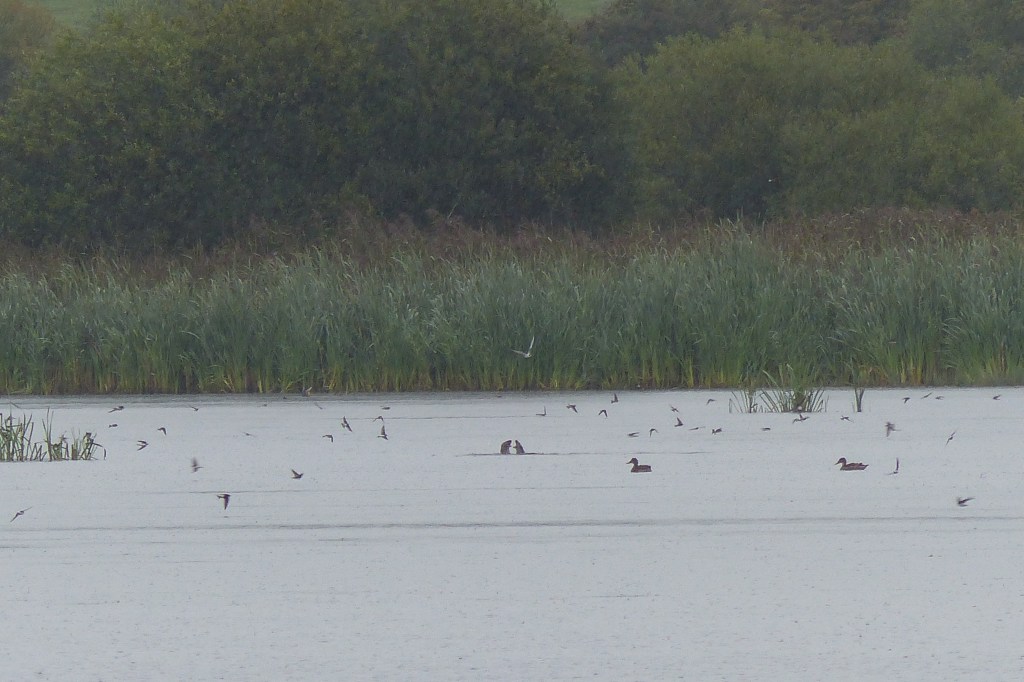
I stopped off at Leighton Moss on my way to Scotland, with a view to buying binoculars more than seeing any particular wildlife. I knew Leighton Moss was famed for its otters, but I thought that, turning up as I did at midday, I wouldn’t be in with a chance of seeing one.
It was a miserable day, the rain hammering down pretty consistently, and I set off happily with my new bins to the Causeway Hide. House and sand martins were whipping over the lagoon at spectacular speeds, picking up insects in a flurry of darting black bodies.
We settled down and said “hello” to the other people in the hide. “There’s an otter out there,” said one of them, casually.
I snatched up my binoculars and looked out to where they were pointing. There was indeed a long dark shape slipping about in the water, frightening the ducks.
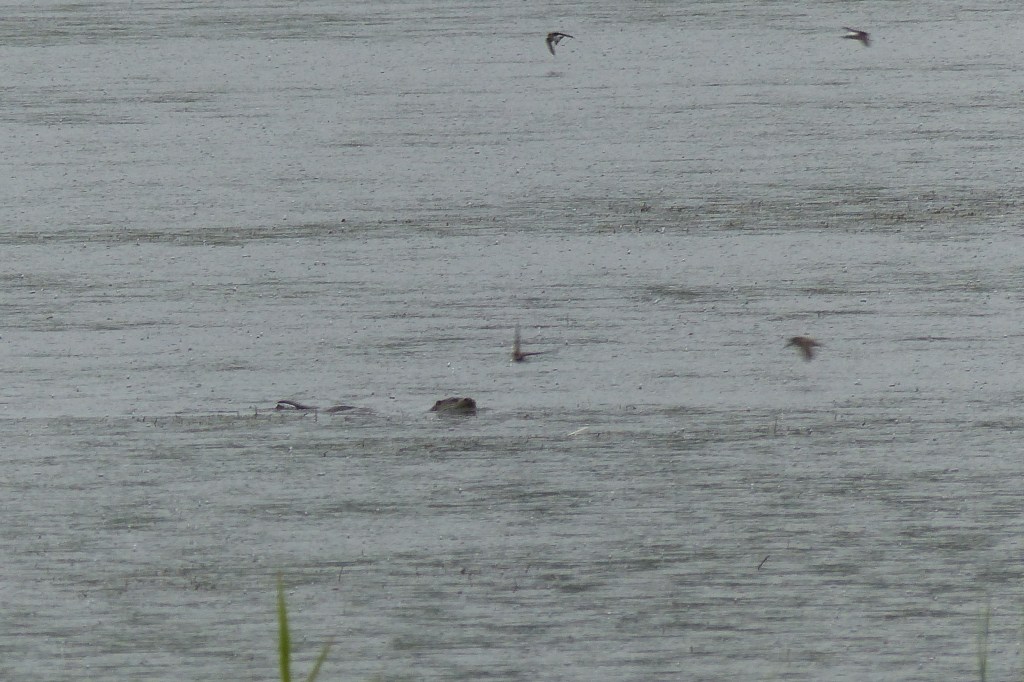
This first otter was swiftly joined by a second, and they slunk about before coming together and thrashing about in the water, all mouths and tails. We followed one round after it left, walking alongside it towards the Lower Hide, before it finally disappeared from sight.
Our first encounter with otters gave us the otter bug, and now, once a month, my boyfriend and I roam around Bristol’s waterways looking for signs of otters – mostly spraint – and recording them for the Bristol Otter Survey Group.

It’s really astounding to think that we have otters living alongside us in our cities. Otters were restricted to only a few small parts of the UK by the 1970s, a decline caused by organo-chlorine pesticides. Since these were withdrawn from use, otters have been spreading back into many areas, according to The Mammal Society. And many of our waterways are now clean enough to support these wonderful mammals.
Otters roam a vast distance as they go about their business hunting fish, frogs and sometimes even waterbirds. They can cover areas of river habitat of up to 12 miles, leaving spraints (poo) on prominent rocks and other landmarks to mark their territory. These markings are often the only way to tell that otters have been in the area.
You’ll have to have a lot of patience to see an otter. Dawn and dusk are usually the best times, and you’ll have to quietly stake out a bit of river, but people have seen them in Eastville Park in Bristol on their morning commute. A lot of it seems to be down to luck, and I’m certainly grateful I got to spend so long having such a magical wildlife experience.
Seeing an otter was one of my 30 nature things to do before turning 30.
 Emma Pocklington