
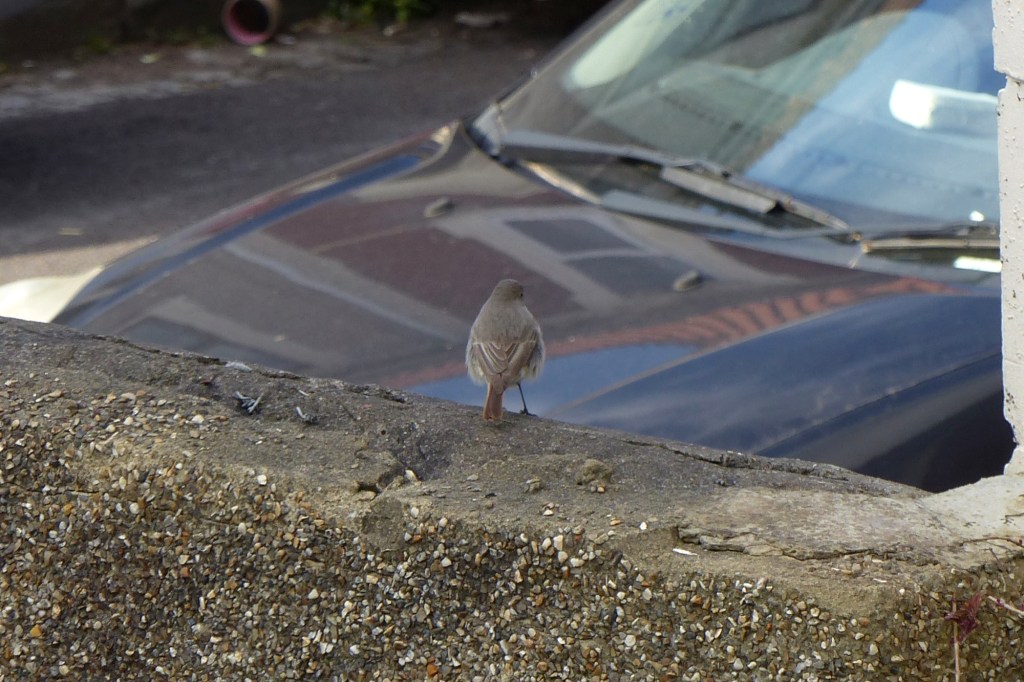
A small, grey blur fluttered against the waterproof cover of the bikes propped against the back wall. There was a flash of orange tail.
I dived out of my seat in the dining room and ran to the utility room window as the bird took off from the ground and shot towards the fence. Perched on the fence it gave me a brief look – it was a pale grey, about the size of a house sparrow with an orange tail – before diving down into next door’s garden.
A bird! A bird in my garden! I was exultant.
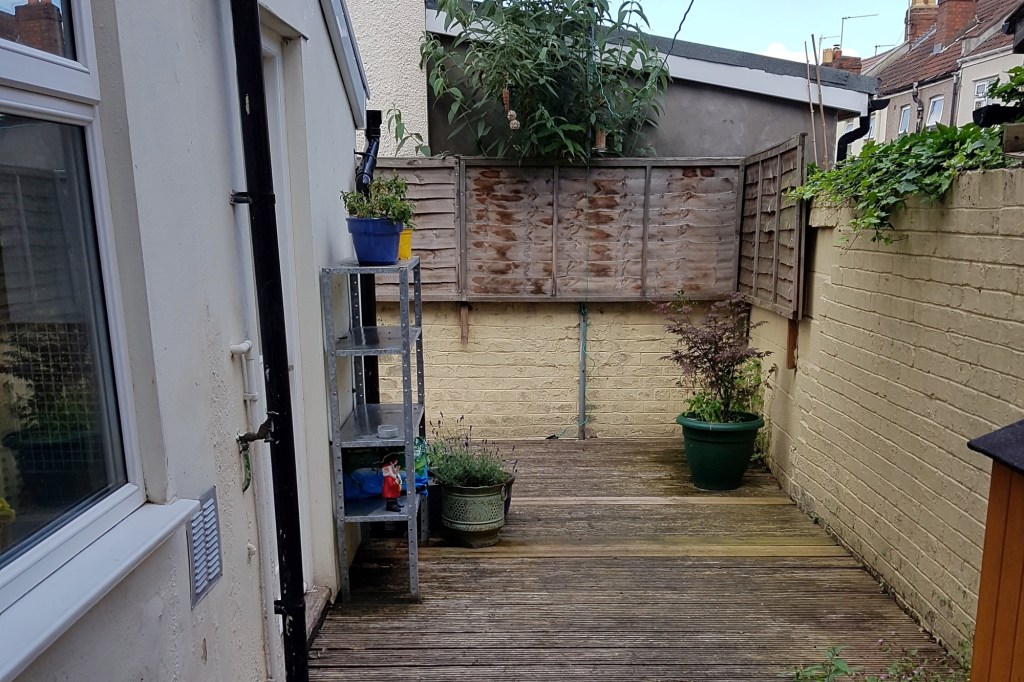
A small L-shape of concrete, with a stone wall topped with fence running around the outside. My garden is a typical inner-city garden. I’m lucky to have any kind of outside space at all, and when I moved in it was a blank canvas, ready to be shaped into a wildlife haven.
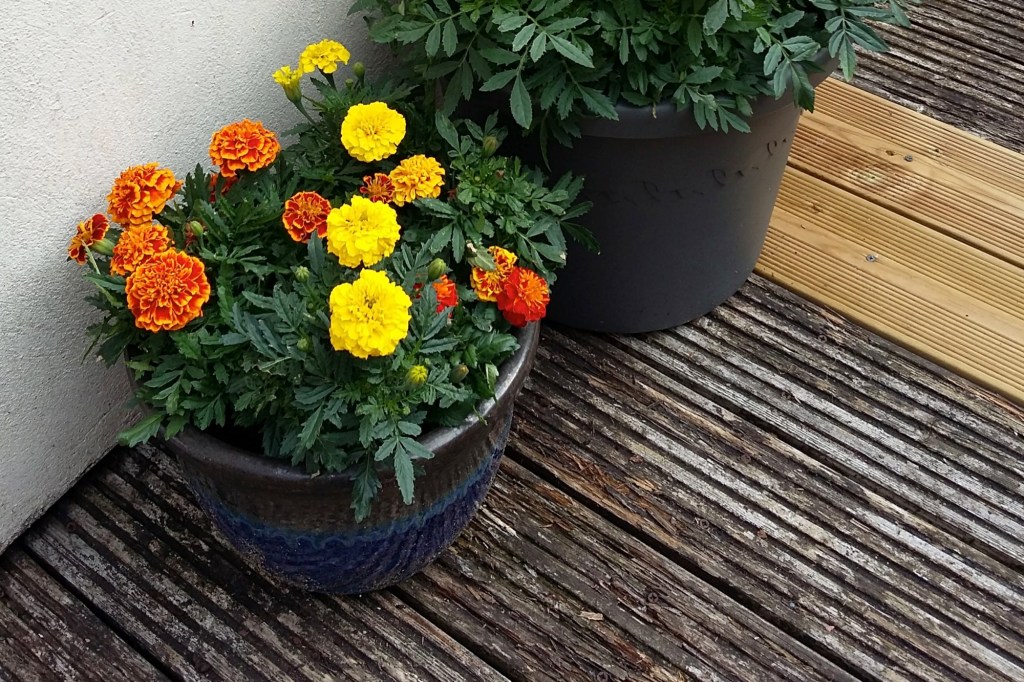
We moved in in summer, so I started with some quick an easy plants for pollinators. Marigolds, fuchsias and lavender were the things I found going cheap. I filled as many pots as I could and bees started to frequent the garden within days.
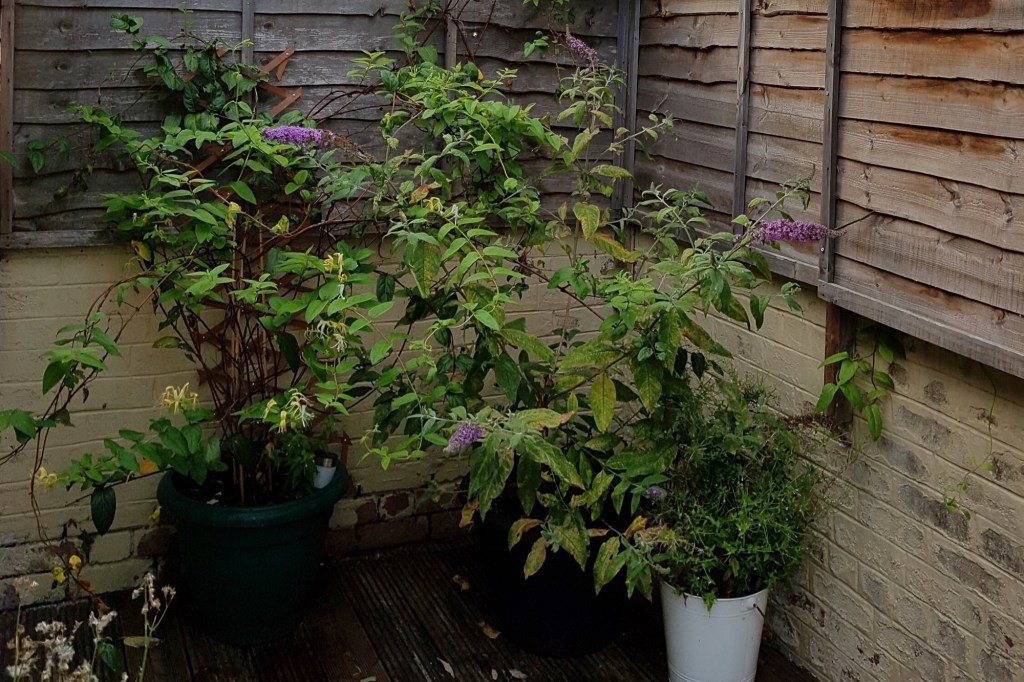
The only plant actually growing in the garden was a straggly buddleia somehow growing out of the back wall. I gave it a prune and it burst into life, drawing in the resident butterflies.
Next, I added bigger plants. If I was going to get any birds coming in they were going to need some shelter, not least because the neighbourhood cats are numerous and treat our garden like a thoroughfare. A honeysuckle in a pot grows along the back wall, and a buddleia in a pot, a holly and a Japanese maple add additional cover.
For two years the garden has had mixed success. It crawls with bugs. Gargantuan spiders lurk in every crevice available, bees and hoverflies buzz overhead and swarms of tiny flies hover over everything. A longhorn beetle clung to the bathroom window, ladybirds trot along the fence, and once a hummingbird hawkmoth wafted through as I sat reading in a garden chair.
The plants have been less successful. A couple have been picked off by the frost, their wrapped pots freezing over winter. The honeysuckle was made sparse and stringy by a fungus, and the holly bush outright curled up and died in the pot. As for the buddleia, the one in the pot is sickly and small, while the one growing out of the wall is flourishing and threatening to bring the whole structure down.
Last winter, I’m not ashamed to say, I gave up. Other priorities took precedence and I left the garden to sort itself out. Come spring, the decking was rotten, so the landlords took it out and laid down gravel. The result has been a multitude of weeks springing up everywhere. Weeds have also taken up residence in the empty pots – the winter having claimed a few more victims.
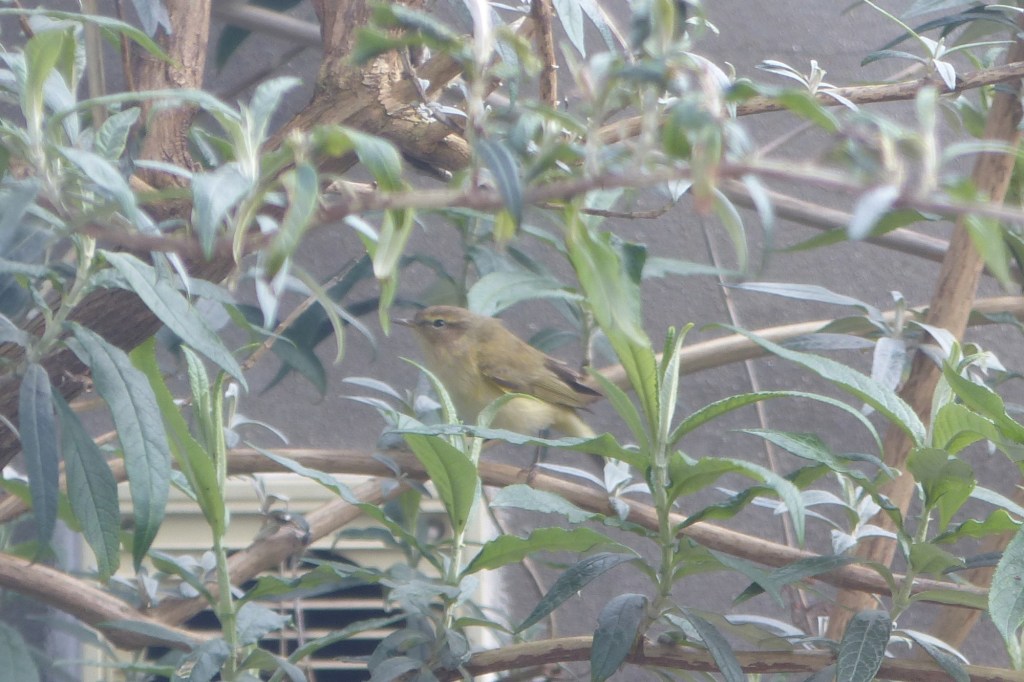
Then something miraculous happened. Left to its own devices the garden has done what it needed to do. The bird I glimpsed through the utility room window was a female black redstart, of which there are fewer than 100 breeding birds in the UK. It was followed a day or two later by a chiffchaff, who sat happily in the buddleia on several occasions, even when we were out in the garden.
I’m not saying a garden can be left entirely to its own devices. Our garden needed the raw materials to get going. It needed the few basic plants, the pots of soil, the summer watering, or it would never have been able to get going. But once I got it started, it took matters into its own hands and did a better job than I ever could have done.
And the black redstart has been back, hoping from garden to garden, green space to green space. For my garden, while it couldn’t sustain much wildlife on its own, is just one stepping stone in a neighbourhood of tiny green spaces. And the black redstart is taking advantage of this patchwork nature reserve.
Getting a bird in my garden was one of my 30 nature things to do before turning 30.
 Emma Pocklington